

Mapping the Field: 527 Articles, New Frontiers, and a LitMap
Aubrie Patterson, M.S. & Olivia Tobias, B.S.
Northern Arizona University
Research on institutional betrayal and institutional courage is exploding, in part because of the work of the Center for Institutional Courage. We are excited to announce a major update to our database on published research. We have catalogued the remaining 2025 literature that meets our inclusion criteria, where institutional betrayal or courage is a finding, focus, or key theoretical framework. This update adds nearly 200 additional articles to the Research Tracking Database, bringing us to a current total of 527.
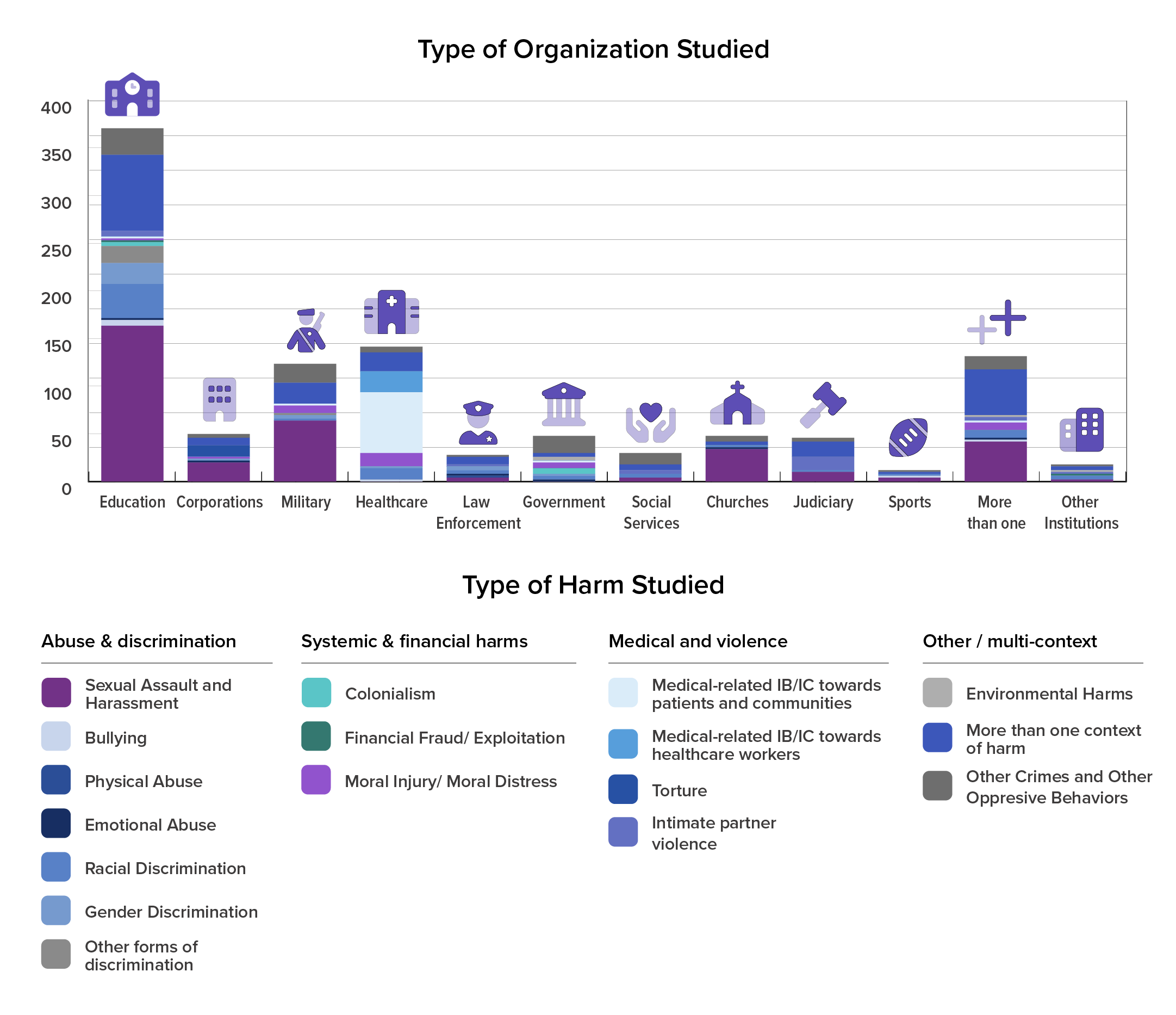
In this update, we have noted a broadening of research into new institutional categories and contexts of harm. While Education continues to be the most prominent category with 186 papers, the data has necessitated creating two new institutional categories. The first is Social Services, which now includes 15 papers that have a focus on institutions such as child protective services and foster care. The second is Sports, with six papers investigating athletic institutions that are primarily centered on the Larry Nasser cases. Additionally, while Sexual Assault and Harassment continues to be our most prominent context of harm with 174 papers, we have identified three additional distinct contexts: Colonialism, Environmental Harms, and Emotional Abuse. These additions reflect an increasing interdisciplinary awareness of how betrayal and courage operate across diverse institutional systems and contexts.
We are also seeing a heartening shift toward research that situates institutional courage as a substantive focus. A standout example of this is Giuseppina Scotto di Carlo’s 2025 book, A Critical Discourse Analysis of Violence against Women: From D.A.R.V.O. to Institutional Courage. We have catalogued multiple chapters from this work, including “Institutional Courage and VAWG,” in which Scotto di Carlo reviews institutional responses to violence against women (VAWG) across 30+ global organizations. Based on her content analysis, the author concludes that institutional courage is a “muscle” that must be developed through structural change. She outlines concrete, courageous actions, such as conducting and publishing anonymous climate surveys, eliminating Non-Disclosure Agreements (NDAs) that silence survivors, and providing non-conditional support to reporters. For an institution to be truly courageous, she argues, it must treat a report of violence not as a threat to be managed, but as a "failure to be corrected."
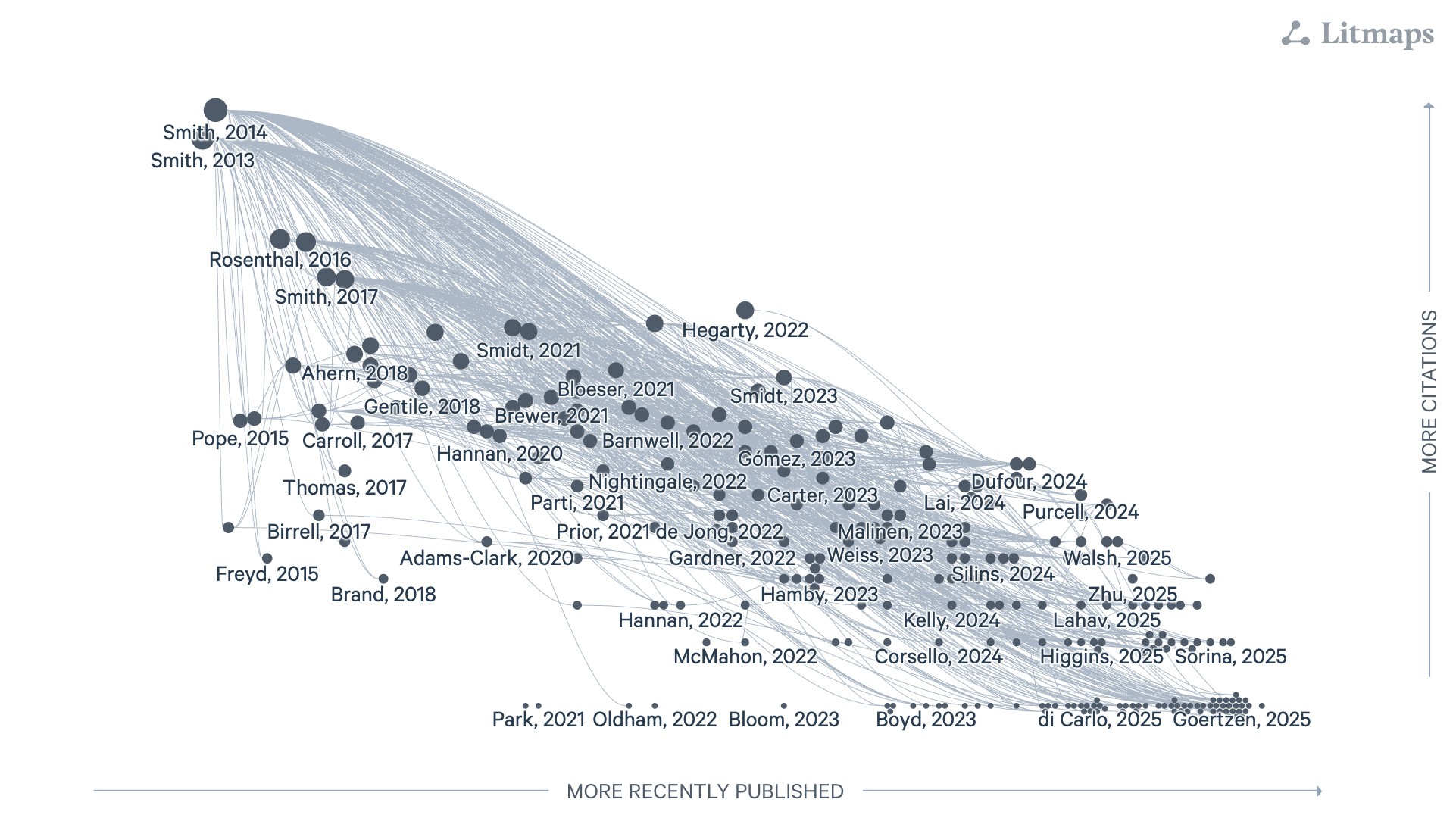
Finally, we have introduced a “State of the Field” tab to the database. This feature provides a visual depiction of patterns in citation volume over time for each peer-reviewed journal article that we have included in the database. We created this map using the AI platform LitMaps, and it is meant to quickly, visually demonstrate the state of the field for institutional betrayal and courage peer-reviewed research.
We thank you for all you do to further the cause of spreading awareness on institutional betrayal and institutional courage.
Join Us and Support Courage
With your help, Courage can conduct groundbreaking scientific research and share what we learn with the world. Together, we can make institutional courage a reality. Courage is a 501(c)(3) exempt organization, and your donation is deductible within the limits set by the IRS.